
The Evolution of Commercial Access Control
Commercial access control has evolved far beyond simple lock-and-key systems. Today's network-based access control solutions integrate seamlessly with CCTV surveillance, visitor management, and building automation systems to provide comprehensive security management for businesses of all sizes.
As a licensed C-7 Low Voltage Systems Contractor in Los Angeles, Espinoza Installation Solutions delivers enterprise-grade access control installations that protect your people, assets, and data while providing convenient, auditable access for authorized personnel.
Types of Access Control Systems
Keycard and RFID Systems
The most widely deployed access control solution for commercial properties. Employees use keycards, fobs, or mobile credentials to gain entry. Modern systems support multi-technology readers that work with both legacy 125kHz proximity cards and newer 13.56MHz smart cards, providing a clear migration path.
Biometric Systems
Fingerprint, facial recognition, and iris scanning technologies provide the highest level of security by verifying identity through unique biological characteristics. Biometric access control is increasingly common in data centers, research facilities, and high-security government installations.
Mobile Credentials
Smartphone-based access using Bluetooth Low Energy (BLE) or NFC technology eliminates the need for physical cards. Employees use their phones to unlock doors, with credentials managed centrally through cloud-based platforms. Ideal for organizations with high turnover or flexible workspaces.
PIN and Keypad Entry
Cost-effective solution for low-traffic areas. Can be combined with other authentication methods for two-factor security. Modern keypads include anti-tamper features and can be integrated into broader access control networks.
Integration with CCTV and Other Systems
One of the most powerful features of modern access control is integration with video surveillance. When an access event occurs — whether authorized or denied — the system can trigger camera recording, capture a snapshot, and log the event with video evidence. This integration provides:
- Visual verification of every entry and exit event
- Immediate alerts for unauthorized access attempts
- Audit trails combining access logs with video footage
- Automated reporting for compliance and investigations
Choosing the Right System for Your Business
Your choice of access control system depends on several factors:
- Number of users and doors — Determines system scale and licensing requirements.
- Security level required — Standard commercial vs. high-security government/military.
- Integration needs — CCTV, alarm systems, visitor management, HR databases.
- Cloud vs. on-premise — Cloud systems offer remote management; on-premise provides local control.
- Budget and scalability — Plan for growth; systems should scale without full replacement.
Installation Considerations
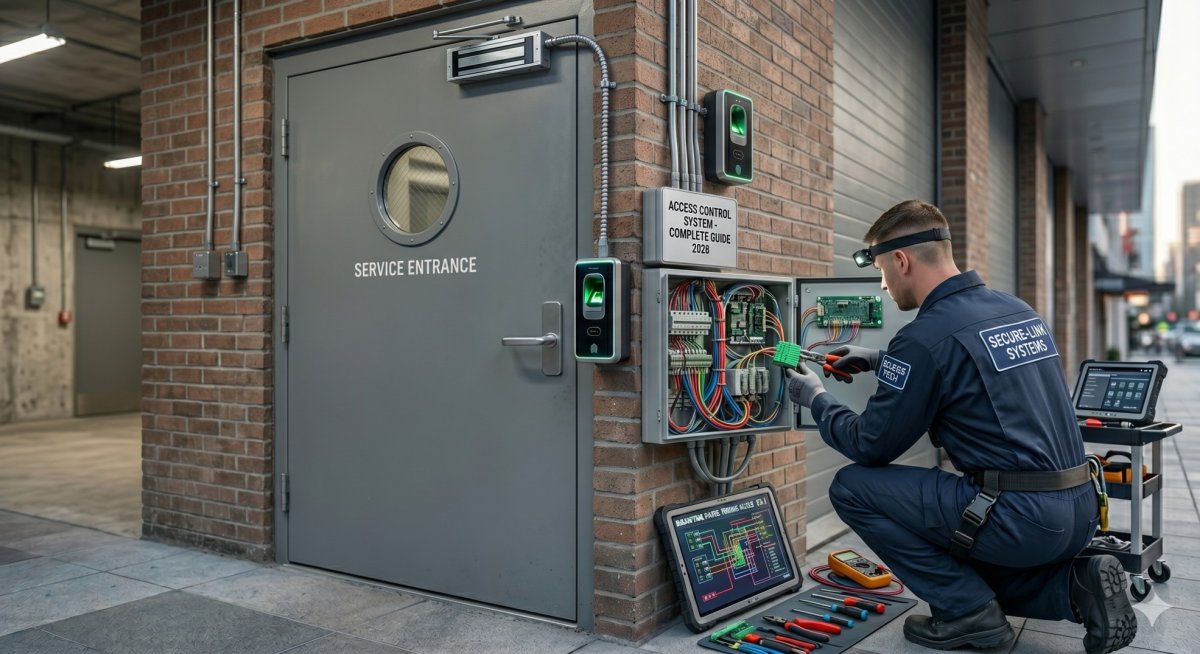
Professional installation by a licensed contractor is critical for access control systems. Proper door preparation, cable routing, network configuration, and fail-safe/fail-secure settings must comply with building codes and fire safety regulations. Our C-7 licensed team handles every aspect of the installation.
Key installation factors include: door frame preparation for electric strikes or magnetic locks, structured cabling to each door controller, network switch configuration with PoE, backup power for emergency operation, and integration testing with existing security infrastructure.
The Espinoza Installation Solutions Difference
With over 25 years of experience serving Los Angeles businesses, we provide end-to-end access control solutions including site assessment, system design, licensed installation, staff training, and ongoing maintenance. Our enterprise clients trust us to secure their facilities with the latest technology, installed to the highest standards.
Share this post:
Related Posts